The Optus Glean promise: predictability
Three pillars. Three commitments. No exceptions.
Predictable cost. One fixed monthly fee, set against a defined scope and an annual indexed review. No variable hours. No surprise invoices. No padded callout charges. Budgeted once, paid by Direct Debit, reviewed once a year.
Predictable presence. The site is cleaned every day it is meant to be cleaned. A named primary cleaner is rostered to your contract, supported by a named relief who is already vetted, inducted, and trained on the same colour-coded system and IPC standard. The schedule does not depend on whether one person is available on one day.
Predictable freedom. A single point of accountability. One contract. One named manager. One number to call. Cleaning is no longer a problem the site has to manage — it is a service that runs.
Why cleaning in Ireland is structurally hard to get right
Most cleaning provision in Ireland — including in healthcare-adjacent settings — is delivered by a workforce that is structurally part-time and casual. A significant proportion of operatives across the sector also work as healthcare assistants in nursing homes, residential care, and acute hospitals. Cleaning shifts are typically taken when healthcare shifts are not available, and released when they are. This pattern is consistent with CSO labour data on accommodation, food, and administrative-support employment, and it is the underlying reason that buyers across Ireland encounter inconsistency from agencies they have contracted in good faith.
The pattern is reinforced by two background pressures specific to Ireland. Housing affordability limits the catchment for any role paying at or near the minimum wage. The Contract Cleaning Employment Regulation Order rate of €14.80 per hour for 2026, set under the Labour Court's sectoral employment framework, sits close enough to flexible care-sector pay that operatives drift toward whichever shift pays slightly more on the day. Both pressures pull cleaning staff away from contracted shifts and toward casual healthcare work.
The result, from the buyer's perspective, is the experience most practice managers, facilities leads, and procurement officers in Ireland describe: a clean that is half-completed when the contracted cleaner is available, missed entirely when they are not, and accompanied by recurring conversations with the agency about cover that may or may not arrive.
This is the structural problem Optus Glean is built to solve. Our operatives are fully PAYE-employed with guaranteed weekly hours, paid leave, and pension contributions under Irish auto-enrolment. They are paid above the ERO floor deliberately — because the structural reliability of the service depends on the cleaner choosing to remain in the role rather than rotating through casual healthcare shifts. A named primary cleaner is assigned to your site, supported by a named relief, both Garda-vetted and trained to Optus Glean's documented HIQA-aligned IPC standard.
The Scale of Warehouse Cleaning
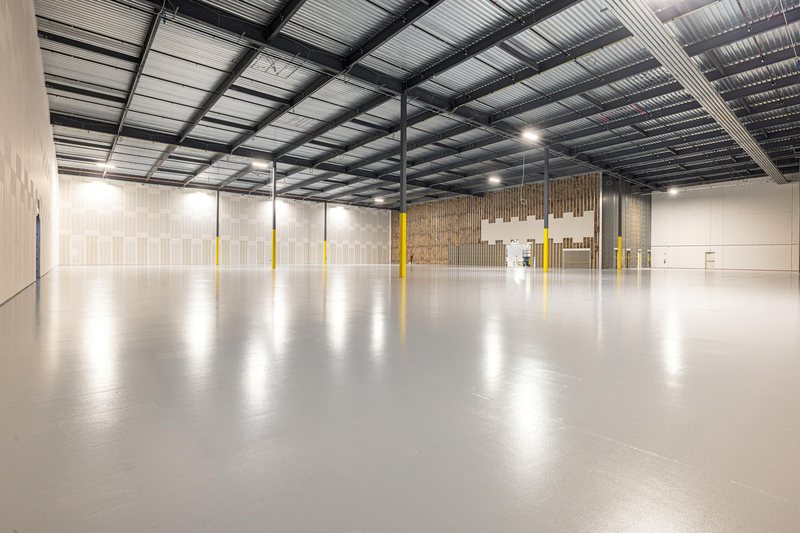
Warehouses and distribution centres are the largest commercial premises in Ireland by floor area. A typical logistics facility ranges from 2,000 to 50,000+ square metres. At this scale, manual cleaning is impractical. A single operative with a mop cannot meaningfully clean a 10,000 sqm warehouse floor in a reasonable time. The only effective approach is mechanised cleaning using ride-on scrubber-dryers, industrial sweepers, and powered access equipment for high-level work.
Warehouse cleaning is also a safety issue. The Health and Safety Authority (HSA) requires employers to maintain clean, safe working environments. Dust accumulation on racking and overhead structures is a fire risk. Spillages on warehouse floors are a slip hazard. Debris in loading bays creates trip hazards. Bird droppings on stored product is a contamination and health risk. And poor housekeeping attracts pests, which in turn create regulatory and reputational problems.
Optus Glean provides industrial-scale cleaning for warehouses, distribution centres, logistics hubs, cold stores, and fulfilment centres across Ireland. We deploy ride-on scrubber-dryers, industrial sweepers, powered access platforms, and pressure washing equipment to deliver the standard of cleanliness that your operation demands.
Floor Cleaning: Ride-On Scrubber Technology
Warehouse floors take enormous punishment from forklift traffic, pallet jacks, foot traffic, and product spillages. Concrete floors develop tyre marks, oil stains, and embedded dirt that standard mopping cannot remove. Our ride-on scrubber-dryers solve this problem at scale.
A ride-on scrubber applies cleaning solution, scrubs the floor with rotating brushes or pads, and vacuum-dries the surface in a single pass. The floor is walk-safe and forklift-safe within minutes. Our machines clean 3,000 to 5,000 square metres per hour, which means a 10,000 sqm warehouse floor can be completed in 2–3 hours. For comparison, the same area would take a team of 4 operatives with mops approximately 12–16 hours.
We provide scheduled floor cleaning (weekly, bi-weekly, or monthly depending on usage) and one-off deep cleans for warehouse moves, audits, and lease returns. Our machines handle concrete, resin-coated, polished concrete, and painted floor surfaces.
High-Level Cleaning
Dust accumulates on racking, overhead structures, lighting, sprinkler systems, and roof trusses. In a warehouse with 10-metre-high racking, the upper levels can accumulate centimetres of dust over months. This dust is a fire accelerant, a respiratory hazard for workers, and a product contamination risk for stored goods.
- Racking uprights and horizontal beams: industrial HEPA-vacuumed
- Mesh decking and pallet supports: vacuumed and wiped
- Lighting fixtures and diffusers: cleaned and dedusted
- Sprinkler heads and fire detection equipment: carefully cleaned without activation
- Roof trusses, purlins, and overhead cable trays: vacuumed with extended reach
- Extraction fans and ventilation louvres: cleaned and degreased
For heights up to 6 metres, we use industrial HEPA-filtered vacuums with telescopic wands. Above 6 metres, we deploy scissor lifts or cherry pickers operated by trained, IPAF-certified operatives. High-level cleaning is typically scheduled quarterly or bi-annually outside of operational hours.
Loading Bay and Dock Door Cleaning
Loading bays are the interface between the warehouse and the external environment. They are exposed to weather, vehicle exhaust, pallet debris, shrink-wrap waste, and external contamination. Dirty loading bays create slip hazards, attract pests, and give a poor impression to delivery drivers and visiting customers.
- Loading bay floors: swept and scrubbed with ride-on or walk-behind machines
- Dock doors and seals: cleaned and checked for damage
- Dock levellers: debris cleared from pits and hinge points
- External aprons and yard areas: pressure washed to remove oil, tyre marks, and debris
- Waste compactor areas: cleaned and deodorised
- Drainage channels: cleared and flushed
Office and Welfare Area Cleaning
Warehouses contain office areas, canteens, washrooms, and welfare facilities that require standard commercial cleaning. We provide daily or scheduled cleaning of offices, meeting rooms, canteens and kitchen areas, washrooms (including shower facilities for warehouse operatives), corridors and stairways, and reception and visitor areas. This is bundled with the warehouse cleaning contract for a single, all-inclusive monthly price.
Warehouse Cleaning Pricing
| Service | Price Range | Notes |
|---|---|---|
| Scheduled floor cleaning (small warehouse) | €800 – €1,500/month | Under 1,000 sqm, weekly |
| Scheduled floor cleaning (medium warehouse) | €1,500 – €3,000/month | 1,000-5,000 sqm, weekly |
| Scheduled floor cleaning (large facility) | €3,000 – €5,000+/month | 5,000+ sqm, weekly |
| High-level racking clean | €1,500 – €5,000 | Quarterly or bi-annual, IPAF access |
| Loading bay deep clean | €500 – €1,500 | Monthly or quarterly |
| Office/welfare area cleaning | €300 – €800/month | Daily or 3x/week, bundled with warehouse |
Note: Prices exclusive of VAT. All pricing includes machine hire, chemicals, and operator costs. One-off deep cleans for warehouse moves, audits, or lease returns are priced individually.
Food-Grade and Pharmaceutical Warehouses
Warehouses storing food, beverages, or pharmaceutical products face additional hygiene requirements under HACCP, FSAI, BRC, and HPRA regulations. Optus Glean provides food-grade and pharmaceutical-grade warehouse cleaning with appropriate chemicals, documented schedules, and audit-ready records. We clean to BRC and FSAI standards, using non-taint, food-safe products throughout. Our cleaning schedule forms part of your facility's HACCP or GMP documentation.
Pest Prevention Through Cleaning
Professional warehouse cleaning is a critical component of integrated pest management. Pests (rodents, birds, insects) are attracted by food debris, packaging waste, standing water, and undisturbed harbourage points. Our cleaning removes these attractants systematically. We coordinate with your pest control provider to ensure our schedule supports their baiting and monitoring programme. Regular high-level cleaning removes bird nesting materials. Perimeter cleaning keeps vegetation and debris away from building walls. Loading bay cleaning eliminates food residues that attract rodents.
Types of Warehouses We Clean
Every warehouse type presents distinct cleaning challenges. The approach, chemicals, equipment, and scheduling differ significantly depending on what the warehouse stores, how it operates, and what regulatory standards apply. Optus Glean has developed tailored cleaning programmes for each warehouse category.
Cold Store and Temperature-Controlled Warehouses
Cold stores operate at temperatures ranging from -25°C for frozen food storage to +5°C for chilled goods. These environments create unique cleaning challenges that ambient warehouse cleaning methods cannot address. Condensation forms rapidly when warm air enters during loading dock operations, creating slip hazards and moisture damage. Ice build-up on floors, racking, and evaporator units must be managed without disrupting the cold chain. Cleaning chemicals must be effective at low temperatures — many standard detergents lose efficacy below 5°C.
Our cold store cleaning programme uses low-temperature cleaning agents specifically formulated to work in freezer and chiller environments. We schedule cleaning during loading windows when temperatures are marginally warmer, reducing condensation risk. Floor cleaning in cold stores requires specialist scrubber-dryers with heated solution tanks and anti-freeze components. We remove ice build-up from evaporator coils, defrost drains, and floor surfaces using controlled defrosting methods that protect stored product. All cold store cleaning is HACCP-documented and forms part of the facility’s food safety management system.
Ambient Warehouses and General Storage
Ambient warehouses store non-temperature-sensitive goods — consumer electronics, furniture, textiles, building materials, automotive parts, and general merchandise. While they lack the temperature challenges of cold stores, ambient warehouses generate substantial dust from cardboard packaging, shrink wrap, wooden pallets, and the goods themselves. Forklift traffic creates tyre marks and deposits rubber dust across concrete floors. Spillages of oils, lubricants, and packing materials are common.
Our ambient warehouse cleaning programme focuses on dust suppression, floor maintenance, and systematic high-level cleaning. Ride-on scrubber-dryers with appropriate pad or brush attachments remove embedded tyre marks and oil stains from concrete. HEPA-filtered industrial vacuums capture fine dust particles that standard sweeping merely redistributes. Scheduled high-level cleaning prevents the dust blanket that accumulates on racking beams, lighting, and overhead structures over weeks and months.
Distribution Centres and Cross-Dock Facilities
Distribution centres operate at a pace that general warehouses do not. Product moves through rapidly — arriving at inbound docks, being sorted and consolidated, and departing from outbound docks within hours or days rather than weeks. Cross-dock facilities may handle product that never enters racking at all, moving directly from inbound to outbound vehicles. This high-throughput environment generates significant contamination: packaging waste, pallet debris, shrink wrap offcuts, label backing paper, and spillages from damaged goods. Loading bays cycle through dozens of vehicle movements daily, tracking in external dirt, rainwater, mud, and diesel.
Our distribution centre cleaning is designed around operational windows. We clean during shift changes, overnight, or during planned downtime. Speed is critical — our ride-on scrubbers can clean a 5,000 sqm sortation floor in under two hours. Loading bay cleaning runs on a continuous rotation, with inbound and outbound bays cleaned between vehicle slots. We provide permanent on-site cleaning operatives for large distribution centres that operate 24/7, ensuring continuous cleaning coverage without disrupting throughput.
E-Commerce Fulfilment Centres
E-commerce fulfilment centres are the fastest-growing warehouse segment in Ireland, driven by online retail growth. These facilities differ from traditional warehouses in several important ways: they contain extensive mezzanine levels and multi-storey pick areas, they use conveyor systems and automated sortation equipment that generate vibration and fine dust, they employ large workforces (often 200–500+ operatives) who require extensive welfare facilities, and they operate at peak intensity during seasonal surges (Black Friday, Christmas, January sales) when cleaning demands spike dramatically.
Our fulfilment centre cleaning covers the full facility: pick floors across all mezzanine levels, conveyor systems and sortation equipment surrounds, packing stations and despatch areas, goods-in and returns processing zones, office and management areas, canteens and break rooms (often multiple across the facility), washrooms and locker rooms, and external yard and vehicle marshalling areas. We provide surge cleaning capacity during peak trading periods, scaling our team to match your operational demands.
Warehouse-Specific Cleaning Challenges
Warehouse environments present cleaning challenges that are fundamentally different from office, retail, or hospitality premises. Understanding these challenges is essential to delivering effective cleaning outcomes.
Racking Dust Accumulation
Warehouse racking systems create vast horizontal surfaces at multiple heights where dust accumulates undisturbed. A standard 10-metre-high racking bay has horizontal beam surfaces at every 300mm increment — that is over 30 horizontal dust-collection surfaces per bay. Multiply by hundreds or thousands of bays and the total dust-accumulation surface area is enormous. This dust is not merely cosmetic. It is a documented fire accelerant: the Health and Safety Authority classifies accumulated dust on elevated surfaces as a significant fire risk factor. It is also a respiratory hazard for warehouse operatives, particularly those working at height on order picker trucks. For food warehouses, racking dust risks product contamination through airborne particle fallout.
Our high-level racking cleaning programme uses HEPA-filtered industrial vacuums with telescopic wands (reaching 6 metres from floor level) and powered access platforms (MEWP) for heights above 6 metres. We clean systematically: uprights, horizontal beams, cross-braces, mesh decking, and pallet supports. For food warehouses, we combine vacuuming with antimicrobial wiping of surfaces in direct proximity to stored product.
High-Level Cleaning Access
Modern warehouses have clear heights of 10 to 18 metres. Cleaning at these heights requires specialist access equipment and trained operatives. We deploy scissor lifts for wide-aisle areas where stable, elevated platforms allow efficient cleaning of racking, lighting, sprinklers, and roof structures. Cherry pickers (boom lifts) provide reach into narrow aisles and over racking where scissor lifts cannot access. All powered access equipment is operated by IPAF-certified operatives. For very high structures (roof trusses, purlins above 15 metres), we use industrial rope access technicians who are IRATA-certified. This combination of access methods means no surface in a warehouse is beyond our cleaning capability.
Loading Bay Contamination
Loading bays are contamination gateways. Every vehicle that docks introduces external pollutants: road grit, diesel, rainwater, mud, leaves, and airborne particulates. Dock seals and dock shelters reduce but do not eliminate this ingress. The dock leveller pit — the recessed area containing the leveller mechanism — accumulates debris, water, and waste that becomes a harbourage point for pests and a source of odour. The external apron (the concrete pad where vehicles reverse and dock) accumulates diesel, hydraulic fluid from tail lifts, tyre deposits, and general road dirt.
Our loading bay cleaning addresses every surface: the bay floor (scrubbed with degreasing agents), the dock leveller pit (cleared of debris and flushed), dock door tracks and seals (cleaned and inspected for damage), the external apron (pressure washed to remove oil and tyre marks), overhead door mechanisms (dedusted and checked), and the transition zone between the loading bay and the main warehouse floor (scrubbed to prevent tracked-in contamination spreading into the storage area).
Forklift Marks and Floor Damage
Forklift traffic is the primary cause of warehouse floor deterioration. Polyurethane forklift tyres deposit black rubber marks on concrete floors. Counterbalance forklifts create scuff marks during turning manoeuvres, particularly in aisle intersections and at the end of racking runs. Pallet jacks drag marks along travel paths. Over time, these deposits build into a black, waxy layer that is extremely difficult to remove with standard cleaning methods.
Our floor restoration programme uses ride-on scrubbers with aggressive diamond-impregnated pads or heavy-duty brush attachments combined with alkaline degreasing solutions to cut through tyre deposits. For severe accumulation, we deploy floor grinding and polishing equipment that physically removes the top layer of contaminated concrete, restoring the original floor appearance. This is a periodic deep-clean service typically performed annually or bi-annually, supplementing the regular scheduled floor scrubbing that prevents build-up between deep cleans.
Equipment We Deploy in Warehouses
Effective warehouse cleaning requires industrial-grade equipment that can match the scale of the environment. Consumer or light-commercial machines are inadequate for warehouse applications.
Ride-On Scrubber-Dryers
Our ride-on scrubber-dryer fleet is the backbone of warehouse floor cleaning. These machines weigh 500–1,200 kg, carry 200–400 litres of cleaning solution, and clean 3,000–5,000 sqm per hour. The operator rides on the machine, controlling speed, solution flow, brush pressure, and vacuum suction. In a single pass, the machine applies cleaning solution through front jets, scrubs the floor with counter-rotating cylindrical brushes or disc pads, and vacuum-dries the surface through a rear squeegee assembly. The floor is walk-safe and forklift-safe within 30 seconds of the machine passing. For heavily soiled areas, we make multiple passes or use pre-spray applications.
Industrial Vacuum Systems
We use three categories of industrial vacuum: HEPA-filtered dry vacuums (for dust, fine particles, and contamination-sensitive environments), wet-and-dry vacuums (for spillage recovery, flood response, and general liquid removal), and centralised vacuum systems (for large facilities where we install fixed extraction points connected to a central collection unit). All HEPA-filtered vacuums capture 99.97% of particles at 0.3 microns, which is essential for pharmaceutical warehouses, food storage, and environments where airborne contamination control is required.
Powered Access Platforms
High-level cleaning requires safe access to elevated surfaces. We deploy scissor lifts (vertical lift platforms providing stable, spacious work platforms at heights up to 15 metres — ideal for open warehouse areas), articulated boom lifts or cherry pickers (providing reach over and around obstacles such as racking, conveyor systems, and stored product — working heights up to 25 metres), and push-around vertical mast lifts (compact, lightweight platforms for cleaning in narrow aisles and confined spaces at heights up to 8 metres). All operators hold current IPAF (International Powered Access Federation) certification.
Pressure Washing Equipment
External areas — loading bay aprons, yard areas, car parks, and building facades — require pressure washing to remove oil, diesel, tyre marks, moss, algae, and general environmental contamination. Our pressure washers deliver 150–300 bar at temperatures up to 90°C (hot water pressure washing is essential for oil and grease removal). We use surface cleaners (rotating disc attachments) for large flat areas to ensure uniform cleaning without zebra striping. All pressure washing wastewater is managed in compliance with EPA requirements — we use interceptor drains and, where required, collect and dispose of contaminated water responsibly.
Cleaning Schedules by Warehouse Type
Every warehouse operates differently. A cold store handling food products has different cleaning requirements than an ambient warehouse storing consumer electronics. Below are our recommended cleaning schedules for each warehouse type.
| Area / Task | Cold Store | Ambient | Distribution Centre | Fulfilment Centre |
|---|---|---|---|---|
| Main floor scrub | Daily | Weekly | Daily | Daily |
| Loading bay clean | Daily | Weekly | Daily | Daily |
| High-level racking | Quarterly | Bi-annually | Quarterly | Quarterly |
| Lighting & sprinklers | Bi-annually | Annually | Bi-annually | Bi-annually |
| Office & welfare areas | Daily | 3x/week | Daily | Daily |
| Washrooms | Daily | Daily | Daily | 2x daily |
| External yard / apron | Monthly | Quarterly | Monthly | Monthly |
| Pest prevention clean | Weekly | Monthly | Weekly | Weekly |
| Waste compactor area | Weekly | Monthly | Weekly | Daily |
| Deep clean (full facility) | Quarterly | Bi-annually | Quarterly | Quarterly |
Note: Schedules are recommendations based on typical usage patterns. Actual schedules are tailored during the site survey based on your specific operations, product types, throughput, and regulatory requirements.
HACCP Compliance for Food Storage Warehouses
Food storage warehouses in Ireland must comply with Hazard Analysis and Critical Control Points (HACCP) principles under Regulation (EC) No 852/2004 on the hygiene of foodstuffs, enforced by the Food Safety Authority of Ireland (FSAI). Cleaning is a prerequisite programme under HACCP — meaning it must be in place before HACCP plans can function effectively.
For food warehouses, our cleaning programme is designed as a documented HACCP prerequisite that satisfies auditor requirements under FSAI inspections, BRC Global Standards, and retailer audits.
What HACCP-Compliant Warehouse Cleaning Includes
- Documented cleaning schedules — Every task, frequency, chemical, method, and responsible person is documented. Schedules are signed off daily by the cleaning operative and countersigned weekly by the facility manager.
- Food-safe chemicals — All cleaning agents are food-safe, non-taint, and approved for use in food contact and food proximity environments. Safety Data Sheets (SDS) are maintained for every product used.
- Colour-coded cleaning equipment — We use the four-colour system (red for sanitary areas, blue for general low-risk, green for food preparation/storage, yellow for clinical) to prevent cross-contamination between zones.
- Allergen control cleaning — Where the warehouse stores allergenic products, cleaning procedures prevent allergen cross-contact between storage zones. Dedicated equipment is used for allergen-containing areas.
- Verification and validation — ATP bioluminescence testing and microbiological swabbing verify that surfaces are genuinely clean, not just visually clean. Results are recorded and trended.
- Corrective action procedures — When cleaning verification identifies a failure (e.g., an ATP reading above the acceptable threshold), documented corrective actions are triggered: re-clean, re-test, root cause analysis, and preventive measures.
- Pest prevention integration — Cleaning records cross-reference with the pest control monitoring programme. Any pest activity findings trigger enhanced cleaning in the affected zone.
- Audit-ready documentation — All cleaning records, chemical inventories, training records, and verification results are maintained in an audit-ready format. When the FSAI inspector or BRC auditor visits, the documentation is immediately available.
Warehouse Cleaning Pricing Guide
Warehouse cleaning pricing depends on floor area, ceiling height, warehouse type, cleaning frequency, and the scope of services required. The table below provides indicative pricing for the most common warehouse cleaning scenarios in Ireland in 2026.
| Service | Per SQM Rate | Per Session | Monthly Contract |
|---|---|---|---|
| Floor scrubbing (ride-on) | €0.15 – €0.40/sqm | €300 – €2,000 | €800 – €5,000+ |
| High-level racking clean | €0.80 – €2.50/sqm | €1,500 – €5,000 | Quarterly schedule |
| Loading bay deep clean | €2.00 – €5.00/sqm | €500 – €1,500 | €400 – €1,200 |
| Cold store cleaning | €0.30 – €0.80/sqm | €500 – €3,000 | €1,500 – €6,000+ |
| Office & welfare areas | €1.50 – €3.00/sqm | €150 – €400 | €300 – €800 |
| External pressure washing | €3.00 – €8.00/sqm | €400 – €2,000 | Monthly/quarterly |
| Full warehouse bundle | Bespoke | Bespoke | €2,000 – €10,000+ |
All prices exclude VAT at 13.5%. Pricing includes labour, equipment, and chemicals. Volume discounts apply for multi-site contracts and long-term agreements (12+ months).
What Our Warehouse Clients Say
“We operate a 15,000 sqm ambient distribution centre with 12-metre racking. Optus Glean’s ride-on scrubbers transform our floor in under four hours. The high-level racking clean they do quarterly has eliminated the dust complaints from our picking team. Genuinely impressive operation.”
— Warehouse Manager, 3PL Distribution Centre, Dublin West
“Our cold store requires HACCP-compliant cleaning with full documentation for FSAI audits. Optus Glean understood the requirements from the first meeting. Their cleaning records integrate seamlessly with our food safety management system, and the auditors have been consistently satisfied.”
— Quality Assurance Manager, Cold Storage Facility, Cork
“During peak season our fulfilment centre runs 24/7 with 400 staff on site. Optus Glean scaled from 2 cleaners to 8 within a week and maintained spotless washrooms, canteens, and pick floors throughout the Christmas rush. They understand e-commerce operations and work around our throughput without getting in the way.”
— Operations Director, E-Commerce Fulfilment Centre, Kildare
Serving Warehouses Across Ireland
Ireland's warehouse and logistics sector has grown significantly, driven by e-commerce, pharmaceutical manufacturing, and food distribution. Optus Glean serves third-party logistics providers (3PLs), e-commerce fulfilment centres, food and beverage distributors, pharmaceutical warehouses, manufacturing facilities, retail distribution centres, and cold storage operators across all 26 counties. Our fleet of ride-on scrubbers and powered access equipment allows us to service facilities from 500 sqm to 50,000+ sqm.
Frequently asked questions
How much does transport and logistics cleaning cost in Ireland in 2026?
An airport, station, or depot is priced as a fixed monthly fee tied to scope: 24/7 high-throughput cleaning, regulated-zone cover where applicable (airside, security-cleared areas), washrooms, public concourse, staff areas, and out-of-hours deep cleans. The Contract Cleaning ERO 2026 sets a €14.80/hour labour floor across the sector, but reputable providers quote the contract — multi-year term, annual indexed review, single monthly Direct Debit — not the hour.
What standards apply to transport-sector cleaning in Ireland?
The HSA's Safety, Health and Welfare at Work Act 2005 sets the workplace baseline. The IAA regulates Irish airports, with EASA airport facility standards applying inside regulated zones. The Department of Transport sets broader policy. The cleaning programme must produce a documented audit trail — SDS, signed task logs, training register, security clearance records — that supports the operator's regulatory file.
Who can clean an airside zone in Ireland?
Only operatives with current airside security clearance — vetted and ID-pass-holding — can work airside. Clearance is granted by the airport operator under IAA-regulated procedures, with background checks that take weeks to complete. A reputable cleaning provider holds a stable, PAYE-employed pool of cleared operatives so airside cover does not collapse when one person leaves. Casual or agency staffing breaks under this model the first time a clearance lapses.
How is 24/7 cleaning actually delivered at a transport hub?
A 24/7 transport contract typically runs three shifts of named PAYE-employed cleaners with documented handovers, a named site lead per shift, and a reserve relief crew on call. Public concourse, washrooms, and high-throughput areas are cleaned continuously; deep-clean cycles run during the lowest-throughput window. The handover log and shift records are part of the audit trail, not optional.
What's the difference between PAYE and casual cleaning contracts in transport?
A PAYE-employed cleaner is on payroll with the company that signs the contract, paid above the Contract Cleaning ERO €14.80/hour floor, with guaranteed hours, paid leave, and PRSI/pension. A casual or self-employed operative is none of those things. In a regulated environment with security clearance and 24/7 cover, PAYE staffing is the only model that holds the clearance pool, the shift rota, and the named-cleaner continuity together.
How do I evaluate a cleaning provider for a transport site?
Three checks. One: are the operatives PAYE-employed by the company that signs the contract, with security clearance held in their own name? Two: how does the provider hold the clearance pool — what is the redundancy depth across the 24/7 shift pattern? Three: can the provider produce method statements, SDS, and shift handover logs that satisfy IAA and HSA audit standards on day one?
What should be in a cleaning contract for a transport hub?
24/7 shift coverage with named site lead per shift, regulated-zone clearance commitments, public concourse and washroom programme, deep-clean rotation, the chemical regime with SDS, PAYE-employed staff confirmation, fixed monthly fee, annual indexed review, transparent KPI reporting tied to throughput, and a clean exit clause. No per-hour pricing.
How often should a transport hub be deep-cleaned?
A transport hub runs continuous high-throughput visible cleaning, daily out-of-hours resets in the lowest-throughput window, weekly periodic tasks (high-level dusting, glass, signage), and quarterly or six-monthly deep cleans of floors, soft furnishings, and ducting. In Ireland, larger hubs typically schedule deep-clean rotations across phased zones so service continues without disruption.
How Optus Glean handles staff shortages
Every Optus Glean contract is staffed on a redundancy model rather than a single-person model. A named primary cleaner is assigned to the site at contract start. A named relief is assigned alongside them. Both are PAYE-employed by Optus Glean, both are Garda-vetted, both are inducted on the site's specific layout, access protocols, and colour-coded equipment system, and both are trained to the same documented HIQA-aligned IPC standard. Substitution is built into the contract from the first day, not arranged on the day cover is needed.
Sick day cover. When the primary cleaner is unable to work, the named relief is deployed. The site site contact is notified by 06:30 on the morning of the absence by SMS or email, with the name of the relief who is attending. The relief follows the same task list, uses the same equipment, and finishes within the same window. The standard of clean is unchanged because the relief was prepared for this scenario before the absence happened.
Annual leave cover. Annual leave is rostered weeks in advance and the relief is scheduled to cover the full leave period. The site is informed at the start of the leave period — not on the morning leave begins. This is the same model used in clinical rota management: known absences are pre-staffed, not improvised.
Long-term cover. If the primary cleaner is absent for more than two weeks (extended illness, parental leave, bereavement leave), cover is drawn from the wider trained bench rather than relying on the single named relief. The site is kept informed of the cover plan, the named individuals involved, and the expected duration. Continuity of standard is maintained because every operative on the bench is trained to the same documented standard.
Permanent reassignment. If the primary cleaner moves to a new permanent role within Optus Glean — promotion, relocation, retirement — the relief is promoted to primary on a planned timetable, a new relief is trained on the site, and both are introduced to the site before the handover takes effect. There is no day on which the site discovers, after the fact, that their cleaner has changed.
Substitution is Optus Glean's operational problem, not the site's risk to absorb. The buyer pays a fixed monthly fee for a defined scope to be delivered, every day it is meant to be delivered. The mechanism by which we deliver it — primary, relief, bench, retraining — is our cost to manage and our risk to carry.
Last reviewed: 2026-05-06