The Sweet Spot: Commercial Laundry for Irish Businesses
There is a gap in the Irish commercial laundry market that nobody talks about. The large linen companies — Elis, Kings Laundry, Carraig Linen — are set up for volume. They want hotels with 150+ rooms, hospital groups, and national restaurant chains. Their minimum order quantities, delivery schedules, and contract terms are designed for large-scale operations. If you are a 30-room hotel in Westport, a GP surgery in Letterkenny, a restaurant in Killarney, or a salon in Galway, you are too small for them to prioritise.
On the other hand, doing your own laundry in-house costs more than most businesses realise. The equipment alone — commercial washers, dryers, ironers, and folders — costs €50,000 to €200,000 depending on capacity. Then there is the energy (gas, electricity, water), the chemicals, the staff time, the maintenance, the floor space, and the replacement cycle. For a 40-room hotel, in-house laundry can cost 30–40% more per kilogram than outsourcing.
Optus Glean occupies the sweet spot. We provide commercial laundry services to businesses that are too small for the national linen companies but too busy for in-house. We collect your soiled textiles, wash, dry, iron, fold, and return them on a scheduled basis. And because we are also a cleaning company, we can bundle laundry with contract cleaning, washroom services, and healthcare cleaning under a single contract — saving you 15–25% compared to using separate providers.
How Our Commercial Laundry Service Works
The process is straightforward. We handle everything from collection to return, and you receive a single invoice each month.
- Site Assessment — We visit your premises to understand your laundry volumes, textile types, turnaround requirements, and storage facilities. We count items, weigh sample loads, and identify any specialist processing needs.
- Collection Schedule — We agree a collection schedule that matches your business rhythm. Most clients receive 2 to 5 collections per week depending on volume. Same-day and next-day turnaround is available for urgent requirements.
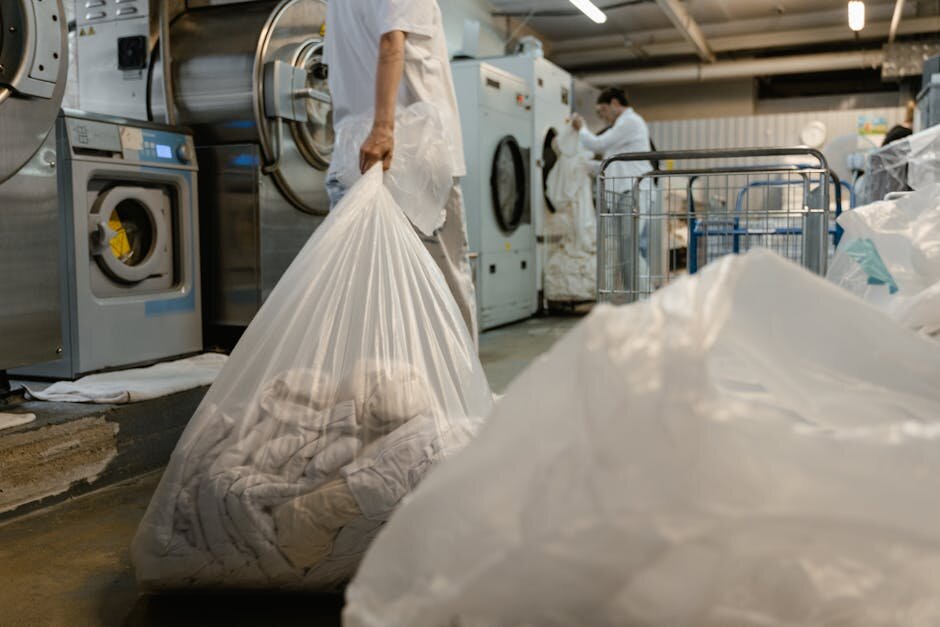
- Processing — Textiles are sorted by type, colour, and wash programme. Commercial machines process loads at temperatures from 40°C (delicates) to 71°C (thermal disinfection for healthcare). Items are dried, ironed or press-finished, folded, and packaged for delivery.
- Quality Check — Every returned item is inspected for stains, damage, and finishing quality. Stained items are re-treated. Damaged items are flagged for replacement. You receive only items that meet our quality standard.
- Delivery — Clean, pressed, folded textiles are delivered to your premises on schedule. Items are stored in your designated linen area. Delivery drivers are Garda vetted and trained in textile handling.
Laundry Pricing in Ireland
Commercial laundry pricing in Ireland is based on weight (per kilogram) or per item, depending on the textile type and the client's preference. Below are indicative 2026 pricing ranges. Every Optus Glean contract is priced individually based on your specific volumes and requirements.
| Service | Price Range | Notes |
|---|---|---|
| Standard bed linen (per kg) | €2.50 – €3.00 | Sheets, duvet covers, pillowcases |
| Towels and bath linen (per kg) | €2.50 – €3.50 | Bath towels, hand towels, bath mats |
| Table linen (per kg) | €3.00 – €4.00 | Tablecloths, napkins, runners |
| Healthcare textiles (per kg) | €3.50 – €4.50 | Thermal disinfection required |
| Chef whites / uniforms (per item) | €3.00 – €5.00 | Jackets, trousers, aprons |
| Duvet (single) | €8.00 – €12.00 | Wash and dry |
| Duvet (double/king) | €10.00 – €18.00 | Wash and dry, feather extra |
| Pillow | €4.00 – €6.00 | Wash and dry |
Minimum order: 20kg per collection. Prices exclusive of VAT. Volume discounts available for clients processing over 200kg per week. Contract clients bundling laundry with cleaning services receive an additional 10–15% discount.
Linen Hire vs Buy: A Cost Comparison
One of the biggest decisions for hotels, restaurants, and healthcare providers is whether to buy their own linen and have it laundered, or to hire linen from the laundry company. Here is how the numbers compare for a typical 40-room Irish hotel.
| Factor | Buy + Launder | Hire (Rental) |
|---|---|---|
| Year 1 linen cost | €12,000–€18,000 (purchase) | €0 (included in hire fee) |
| Annual laundry cost | €15,000–€20,000 | €22,000–€28,000 (hire + wash) |
| Annual replacement cost | €3,000–€5,000 (20–30% per year) | €0 (replacements included) |
| Storage space needed | Par stock of 3x rooms | 1x delivery quantity |
| Cash flow impact | Large upfront, periodic spikes | Predictable monthly payment |
| Quality control | You manage (and replace) | Laundry company manages |
| Total 3-year cost | €60,000–€80,000 | €66,000–€84,000 |
The total costs are often comparable over a 3-year period. The hire model wins on cash flow, simplicity, and consistent quality. The buy-and-launder model wins on total cost if you manage your linen carefully and have adequate storage space. Optus Glean offers both models and advises each client based on their specific situation.
Sectors We Serve
Hotels and B&Bs
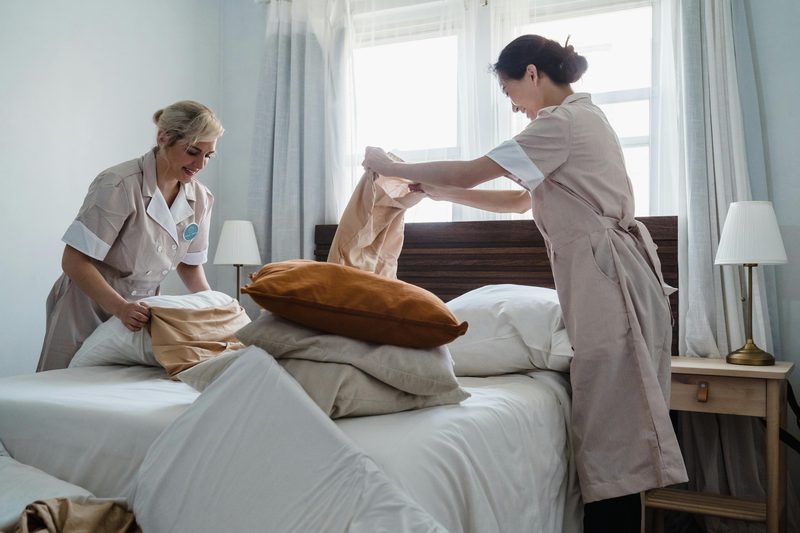
Hotels are our largest laundry client segment. We handle bed linen, towels, bathrobes, restaurant table linen, spa towels, and staff uniforms. For hotels that also use our housekeeping and cleaning services, our teams deliver clean linen directly to floor pantries as part of the cleaning shift, eliminating double handling and saving your front-of-house team significant time.
GP Surgeries and Dental Practices
Healthcare textiles require thermal disinfection at 71°C for a minimum of 3 minutes in compliance with healthcare cleaning standards and EN 14065 requirements. We process clinical gowns, patient drapes, examination couch covers, towels, and staff uniforms with full traceability. Every batch is temperature-logged and documented for HIQA audit readiness.
Restaurants and Cafes
Table linen, napkins, chef whites, aprons, and kitchen towels are collected and returned on schedule. Restaurant laundry demands fast turnaround — often same-day or next-day — and impeccable press finishing. Wine, food, and grease stains are treated with specialist spotting agents before washing to ensure complete removal.
Salons and Spas
Hair salons, beauty salons, and day spas generate large volumes of towels, gowns, capes, and wraps relative to their size. The volume is often too much for domestic machines but too little for the large linen companies to prioritise. Optus Glean provides twice-weekly or thrice-weekly collection and return for salons, with a minimum order as low as 20kg per collection.
Gyms and Fitness Centres
Gym towels require high-temperature washing to eliminate bacteria and odours. We process gym towels, yoga mats covers, and branded towels with separate wash programmes to preserve colour and branding. Collection schedules are designed around peak gym usage patterns.
Airbnb and Short-Let Hosts
Short-let property hosts need fresh bed linen and towels for every guest changeover, often at short notice. Optus Glean provides a scheduled laundry service with optional same-day turnaround for last-minute bookings. Combined with our changeover cleaning service, we offer a complete guest-ready package for Airbnb hosts managing multiple properties.
The Integrated Advantage: Cleaning + Laundry
Optus Glean is one of very few cleaning companies in Ireland that offers an integrated laundry service. This is a genuine differentiator — not a marketing line. Here is why it matters:
- Single invoice — One provider for cleaning and laundry means one contract, one point of contact, and one monthly invoice. Less administration, clearer accountability.
- 15–25% contract value uplift — Adding laundry to an existing cleaning contract increases the overall value of the relationship, which means we can offer more competitive rates on both services.
- Operational efficiency — Our cleaning teams collect soiled linen as part of their cleaning shift and distribute clean linen when it arrives. This eliminates the separate linen delivery window that disrupts housekeeping schedules in hotels.
- Quality continuity — The same company that cleans your rooms also manages your linen quality. If a sheet is stained or a towel is frayed, our team catches it before it reaches the guest room, not after.
- Bundled compliance — For healthcare clients, having cleaning and laundry under one HIQA-compliant provider simplifies audit preparation and reduces compliance risk.
Uniform and Workwear Laundering
Beyond hospitality and healthcare linen, Optus Glean provides a dedicated uniform and workwear laundering service. This covers:
- Chef whites and kitchen uniforms
- Hotel and hospitality staff uniforms
- Healthcare scrubs and clinical wear
- Hi-visibility workwear and PPE
- Corporate branded clothing
- Salon and spa uniforms
Uniforms are processed on dedicated wash programmes to preserve colour, branding, and reflective strips. Items are returned on hangers or folded to specification depending on the client's preference. Name labels and staff identification are tracked through our processing system to ensure items are returned to the correct wearer.
Quality and Compliance
Commercial laundry quality is not just about getting textiles clean. It is about consistent processing, traceability, and compliance with relevant standards.
- EN 14065 (RABC) compliance for healthcare textiles
- Thermal disinfection at 71°C for minimum 3 minutes on healthcare items
- Temperature logging and batch traceability on every wash cycle
- Regular microbiological testing to verify disinfection effectiveness
- Colour-coded bagging systems to prevent cross-contamination
- Documented quality inspection before every delivery
- Stain re-treatment and damage flagging as standard
Frequently Asked Questions About Commercial Laundry
How much does commercial laundry cost in Ireland?
Commercial laundry in Ireland costs between €2.50 and €4.00 per kilogram in 2026. Hotel bed linen is €2.50–€3.00/kg. Table linen is €3.00–€4.00/kg. Healthcare textiles requiring thermal disinfection are €3.50–€4.50/kg. Minimum order is typically 20kg per collection. Contract clients with regular volumes receive preferential rates. Bundling with cleaning services saves an additional 10–15%.
How much does commercial laundry cost per kg in Ireland?
Commercial laundry costs €2.50 to €4.00 per kg. Standard cotton bed linen: €2.50–€3.00/kg. Hospitality table linen: €3.00–€3.50/kg. Healthcare textiles and delicates: €3.50–€4.50/kg. Volume discounts apply for clients processing over 200kg per week.
What is the difference between commercial and industrial laundry?
Commercial laundry handles hospitality, healthcare, and business textiles: bed linen, towels, uniforms, and similar items. Industrial laundry handles heavily soiled workwear, rags, mats, and protective clothing from factories and construction sites, often requiring decontamination. Optus Glean primarily provides commercial laundry but also offers specialist workwear laundering with appropriate handling protocols.
How does linen hire work?
With linen hire, the laundry company owns the linen and rents it to you. Clean linen is delivered on schedule, soiled linen collected, and the cycle repeats. Worn items are replaced automatically. You never need to buy, store, or manage linen inventory. Hire costs 40–60% more per item than laundering your own, but eliminates capital expenditure and replacement costs. It is particularly popular with hotels, restaurants, and healthcare providers.
How much does linen rental cost in Ireland?
Linen rental costs approximately €1.80 to €2.50 per use for a hotel duvet cover (including wash, delivery, and replacement) and €1.50 to €2.00 per use for a restaurant tablecloth. Over 3 years, hire and buy-and-launder models often cost similar amounts. Hire wins on cash flow and simplicity. Buy wins on total cost if you manage inventory well. Optus Glean offers both options.
Do hotels wash their own laundry?
Some large hotels (150+ rooms) operate their own laundries. The majority of Irish hotels, particularly those with 10 to 100 rooms, outsource to commercial laundry companies. Outsourcing eliminates equipment costs (€50,000–€200,000+), energy costs, staff costs, and maintenance. Optus Glean provides an especially compelling option because we combine laundry with housekeeping and cleaning under one contract.
What are the benefits of outsourcing laundry?
Key benefits include eliminating capital expenditure on equipment, reducing energy and water costs, freeing up floor space, ensuring consistent professional quality, reducing staff management, accessing specialist stain treatment, and converting fixed overhead into variable cost. Businesses bundling laundry with cleaning through Optus Glean save 15–25% compared to separate providers.
What is EN 14065 certified laundry?
EN 14065 is the European standard for laundry with biocontamination control (RABC). It ensures laundered textiles meet microbiological quality standards through documented processes, temperature monitoring, testing, and traceability. It is essential for healthcare laundry where thermal disinfection is required. Optus Glean processes healthcare textiles in compliance with EN 14065 requirements.
How much does it cost to wash a duvet commercially in Ireland?
Commercial duvet washing costs €8 to €18 per duvet depending on size and filling. Single: €8–€12. Double: €10–€14. King: €12–€18. Feather and down duvets are at the higher end. For hotels processing duvets in volume, per-kg pricing (€2.50–€3.50/kg) is more cost-effective than per-item pricing.